
Training Knowledge · Article
ParaTri: building training around the athlete
A coaching perspective inspired by Billy Monger's preparation: purposeful sessions, practical planning and individual support.
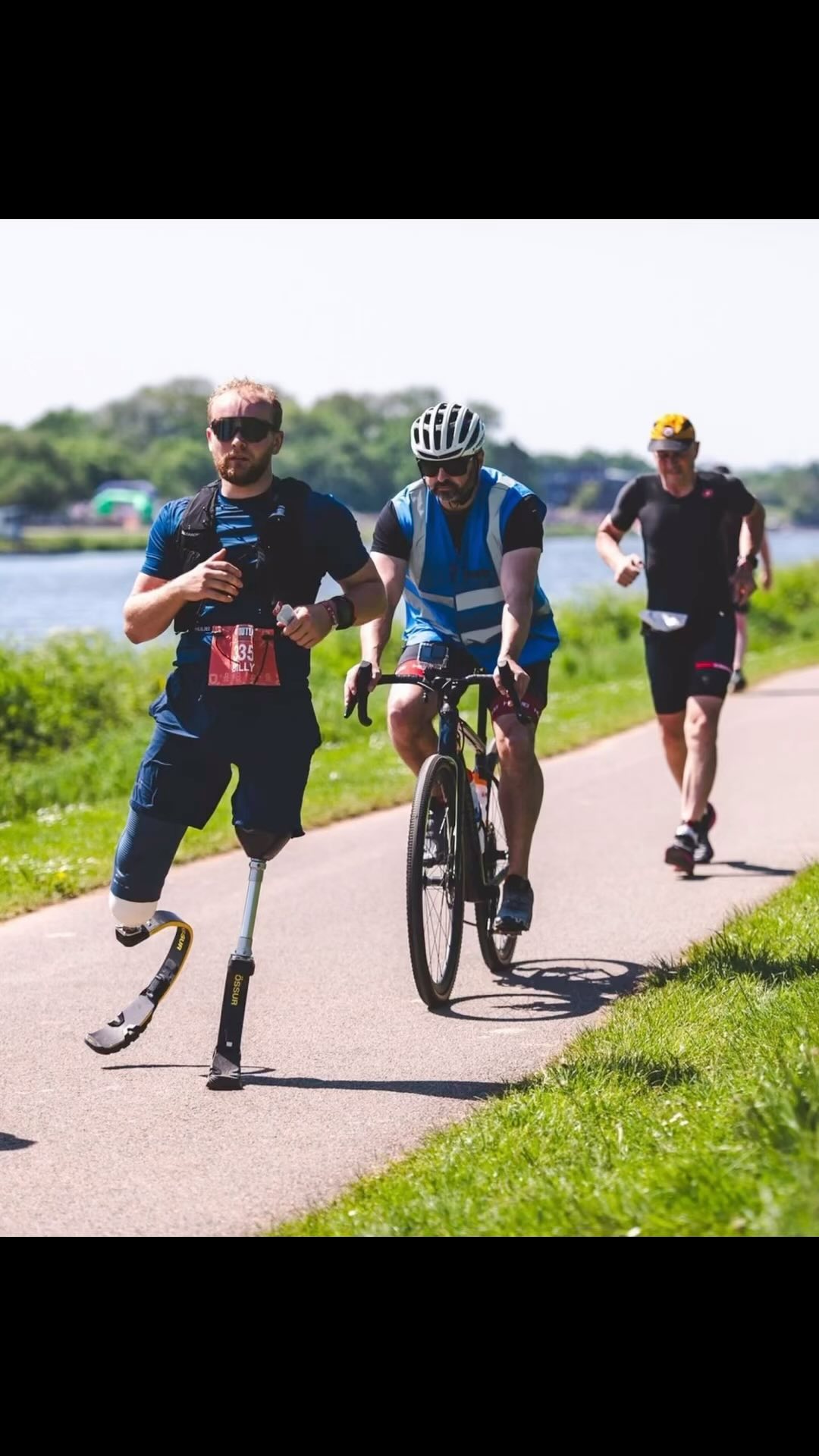
By Precision Coaching · Meet our coaching team
In the Instagram reel linked below, Will introduced his involvement in coaching Billy Monger for a Comic Relief IRONMAN World Championship challenge. The caption highlighted the need to balance training with a demanding media career, alongside equipment and limb-health considerations.
That preparation offers a useful starting point for a broader coaching principle: a programme must fit the athlete's circumstances, rather than asking the athlete to fit an assumed template.
Start with the person and the practical details
Discuss goals, experience, available time and the support already in place. For a ParaTri athlete, equipment, access to facilities and transition arrangements may be part of that conversation. Those needs vary between individuals; one athlete's experience is not a universal model.
A timetable should include the preparation surrounding a session. Pool access, equipment setup, travel and assistance can influence what is realistic within a particular training window.
Give each session a clear purpose
When time is limited, clarity helps. Know what you are trying to achieve, what equipment is needed and how the session fits into the week. Agree how changes will be communicated so that a disrupted day can lead to a practical next decision.
FitLogic describes a cycle of assessment, prescription, evaluation and prediction. That framework can inform a discussion about training, but its general description does not establish validation for every impairment or equipment configuration. Individual judgement remains essential. FitLogic's methodology ↗.
Build the right support around training
Keep coaching and clinical roles clear. Limb health, prosthetic fit and other clinical decisions belong with the appropriately qualified professionals supporting the athlete. This article is about planning and communication, rather than prescribing solutions for those needs.
- Make practical requirements part of the plan from the outset.
- Leave room for preparation and transitions.
- Keep communication open when circumstances change.
- Review the programme around the individual athlete's experience.